THE WHY
Why Men Wear the Hematite Band: A Case for Stone on Your Wrist.

A grown man's wrist has historically carried something with meaning. A watch from a father. A simple ring. A leather strap. A signet, a charm, an heirloom. None of it was strictly necessary. All of it carried a small daily reminder of who the man was and where he came from. Somewhere in the last fifty years the convention thinned out, and the modern adult male wrist has often ended up bare, or carrying a fitness tracker, or carrying a cheap costume bracelet that says nothing in particular. The Hematite Band is, at the simplest level, an argument that the wrist is still a good place to carry something that means something. This is the case for why.
The wrist is the most visible piece of jewellery a man wears
Look at a man during a conversation. The hands are in front of him constantly. The wrist is exposed when he reaches for a glass, when he gestures, when he checks his phone, when he shakes a hand, when he pushes up a sleeve to type. The wrist is, in plain conversation-design terms, the most visible thing on his body that is not his face. A watch lives there because watches were always a way to put a small visible signal of taste, history, or status on the most exposed part of the arm.
A grown man who wears nothing on the wrist is communicating something. Sometimes it is intentional minimalism. Sometimes it is "I have not thought about it." Either way it is a choice, and like all choices it gets read.
The Hematite Band is the case for putting something there that is yours, that you picked, and that you can explain in one sentence if someone asks.
Real material reads differently than plated
The single most reliable signal of taste in men's accessories is whether the material is what it claims to be. A leather strap that is actually leather. A wool jumper that is actually wool. A watch case that is actually steel, not steel-coloured plastic. A bracelet that is actually stone, not coated copper.
The reason this matters is that real material wears in. It develops the small surface character that synthetic material cannot fake: the patina of worn leather, the soft pilling of a wool sweater, the micro-scratches on a steel bezel from years of use. Synthetic materials do not wear in; they wear out. Plating flakes. Coating cracks. Plastic dulls and yellows.
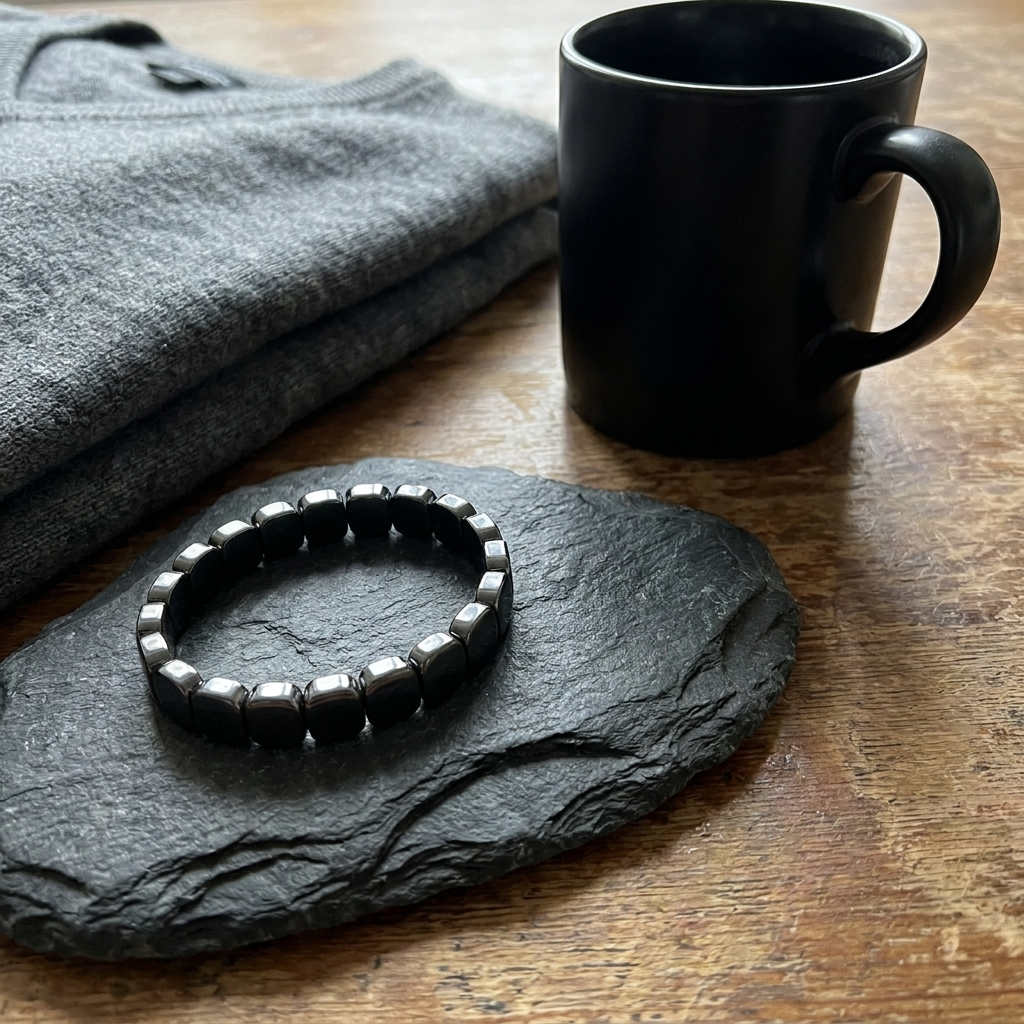
Polished hematite is in the real-material category. The stone does not tarnish because it is already the oxidised end of the iron cycle. The polished face stays glossy under daily wear. The micro-scratches that develop on the surface over years are a record of where the band has been with you, not a sign that the band is failing. The cord is the wear part, and the brand ships free replacement cord with the Shieldwall and Longship sets specifically because the cord will eventually need swapping while the stone is essentially permanent.
Weight on the wrist is a real psychological signal
You do not have to take our word for this. Weighted blankets are an established product category specifically because measured weight against the skin produces a calming sensory effect. The mechanism is well-studied in physical therapy and occupational therapy literature. The brain registers deep, even pressure as a grounding input.
A Hematite Band is not a weighted blanket. It is much lighter, and it is on one localised spot rather than across the whole body. But the same principle holds in a smaller form: a small weighted object on the wrist is something the brain notices, gets used to, and starts to register as part of its baseline. When the band is not there, that baseline feels off. This is one of the most consistent things customers describe in reviews. Wear it for a fortnight and the bare wrist starts to feel wrong.
This is not a health claim. We are not saying the band lowers your blood pressure or improves your sleep. We are describing the same thing anyone who has worn a watch for a decade knows: a small object you carry every day becomes part of how you carry yourself.
It is a conversation that opens a door
Men's accessories that read as deliberate (a vintage watch, a heritage pen, a wedding ring, a particular kind of leather wallet) are quietly responsible for a lot of the first interesting conversations strangers have with each other. A barman notices the watch. A colleague picks up the pen. A new contact at an industry event sees the ring and asks how long.
The Hematite Band has the same property because it is unusual enough to invite a question (most men do not wear stone on their wrist) and visually distinctive enough to be noticed at three feet (the dark polished facets catch light). When the question comes, the answer is short and specific. "It is hematite. The Vikings used the same stone to make iron." That answer takes ten seconds and tends to land. The bracelet is a conversational artefact.
It pairs with everything a watch already does
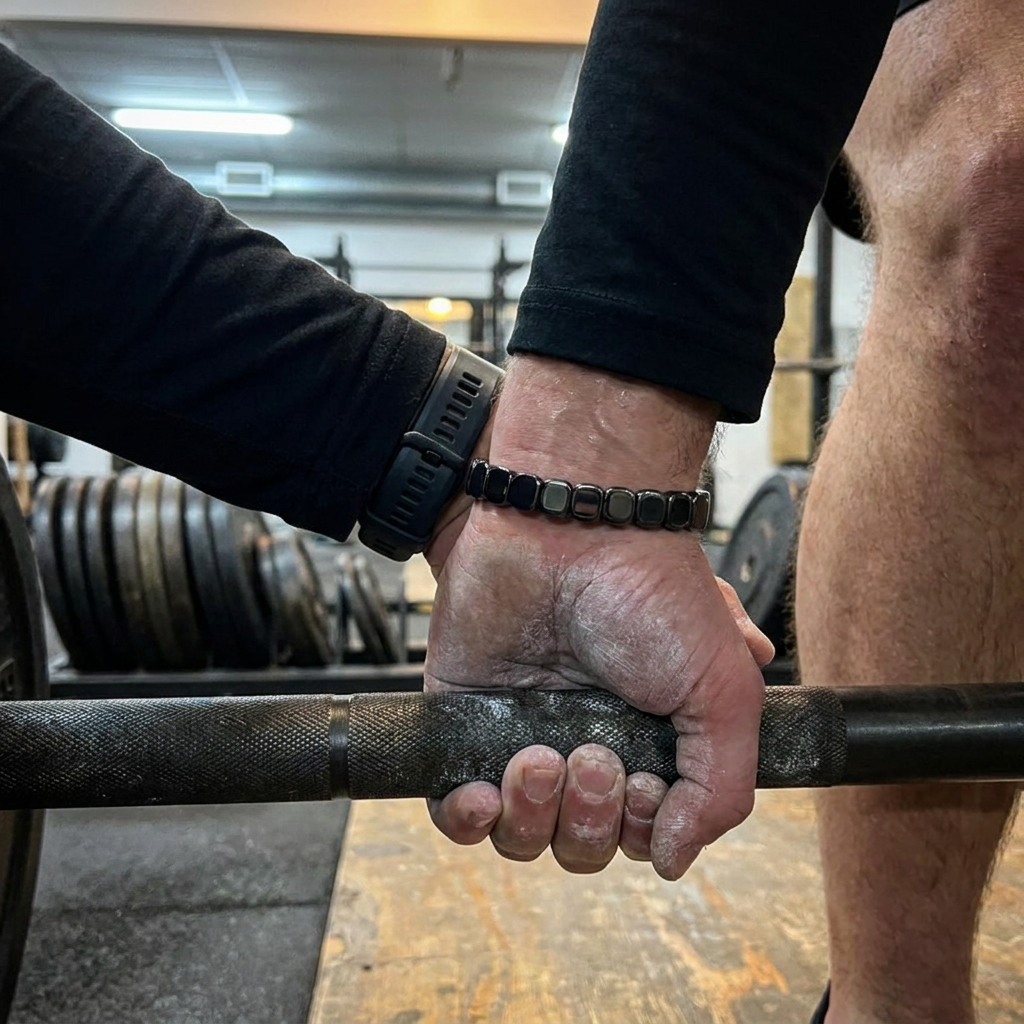
Stacking jewellery is a stylistic decision most men in the watch-buying demographic are wary of. Wearing two bracelets on the same wrist reads as costume. The Hematite Band's low-profile faceted design solves this by sitting under or alongside a watch strap without competing visually. The polished stone reads as a complement to a steel or leather watch, not a rival.
Most customers wear the band on the non-dominant wrist (the same arm the watch sits on, just behind or beside it) or on the opposite wrist as a balance. Either configuration is fine. The Pair Set is specifically designed for the "one on each wrist" pattern.
It is the easiest gift you can give a grown man
If you have ever tried to buy a meaningful birthday or Father's Day gift for a man who already has everything functional, you know the difficulty. Most things he wants for himself he has already bought. Most things you can buy him are either generic (a bottle of whisky, a leather wallet) or pitched at a niche you do not share (specialist tools, fishing gear, watches).
A Hematite Band sits in a specific gift sweet spot. It is interesting enough that he will not have one. It is affordable enough that you are not making him uncomfortable by spending too much. It comes with a story he can tell when someone asks. It pairs with anything else he wears. And it carries a small daily reminder of who gave it to him, which is the actual point of giving a man jewellery in the first place.
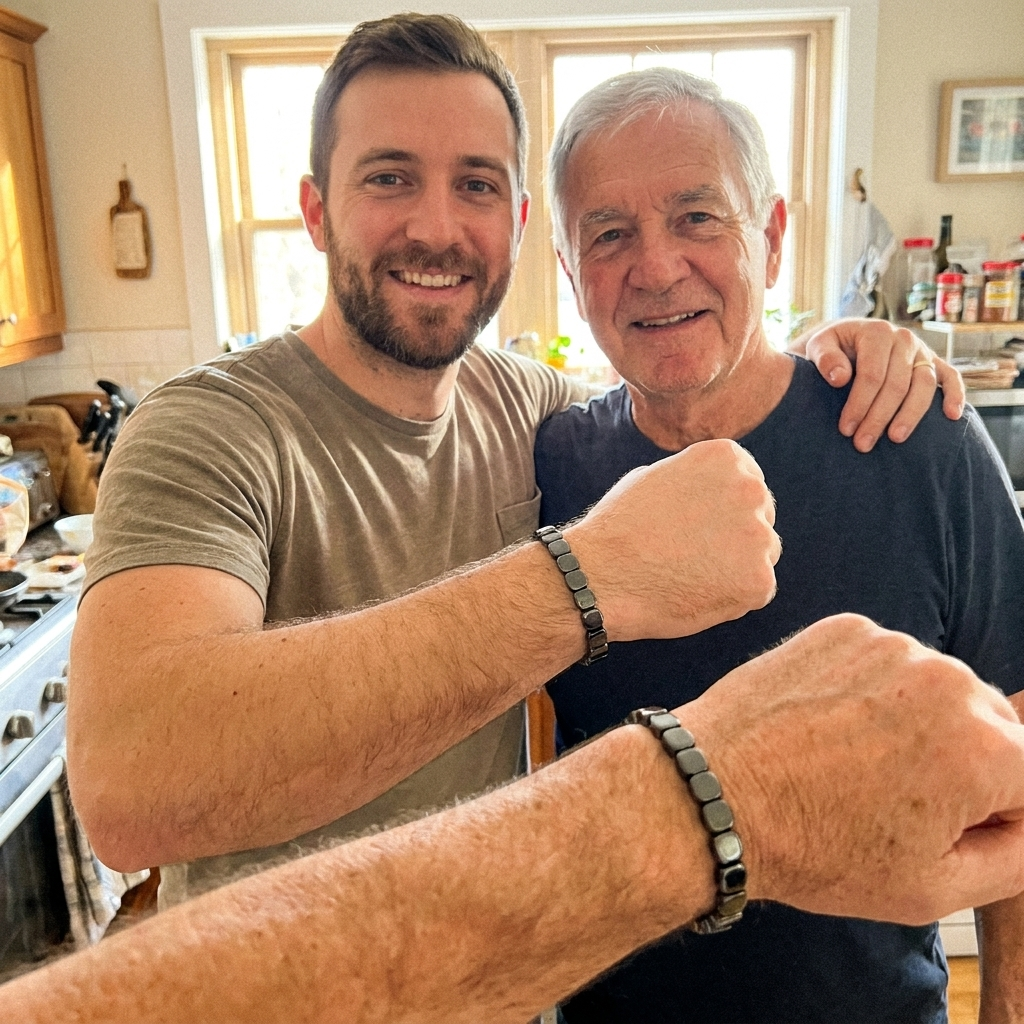
This is why we ship the Shieldwall set with three bands and the Longship set with five. Buying one for yourself and one for your father, your brother, your son, your closest mate, or the colleague who got the promotion is the natural use of those sets. The Gift Stack subscription is the same idea on a calendar.
The masculine adornment tradition is older than the watch
It is worth ending on a small historical note. The Swiss wristwatch as a men's category dates to roughly the First World War. Pocket watches preceded it by a couple of centuries. The signet ring is older. But men have worn stone, bone, metal, and leather on the wrist as long as men have made jewellery, which is at least fifty thousand years and probably much longer. Beaded wrist ornaments have been recovered from late Palaeolithic burials in central Europe. The Egyptians wore them. The Greeks wore them. The Norse wore them. The Native American plains tribes wore them. The Maori wore them. The Aboriginal Australians wore them. Every culture that ever existed put something on the wrist.
The modern bare-wristed adult male is the unusual case. The watch was, historically, just the latest in a very long list of wrist objects. The Hematite Band is another entry in the same list, made from a material that earlier members of the list would have recognised.
That is the case. Real stone on the wrist, deliberate, low-key, with a story. Not because the band does anything you can measure, but because carrying real material in a place where men have always carried it is one of those small daily acts that adds up over time.
See the Hematite Band stacks to start.